
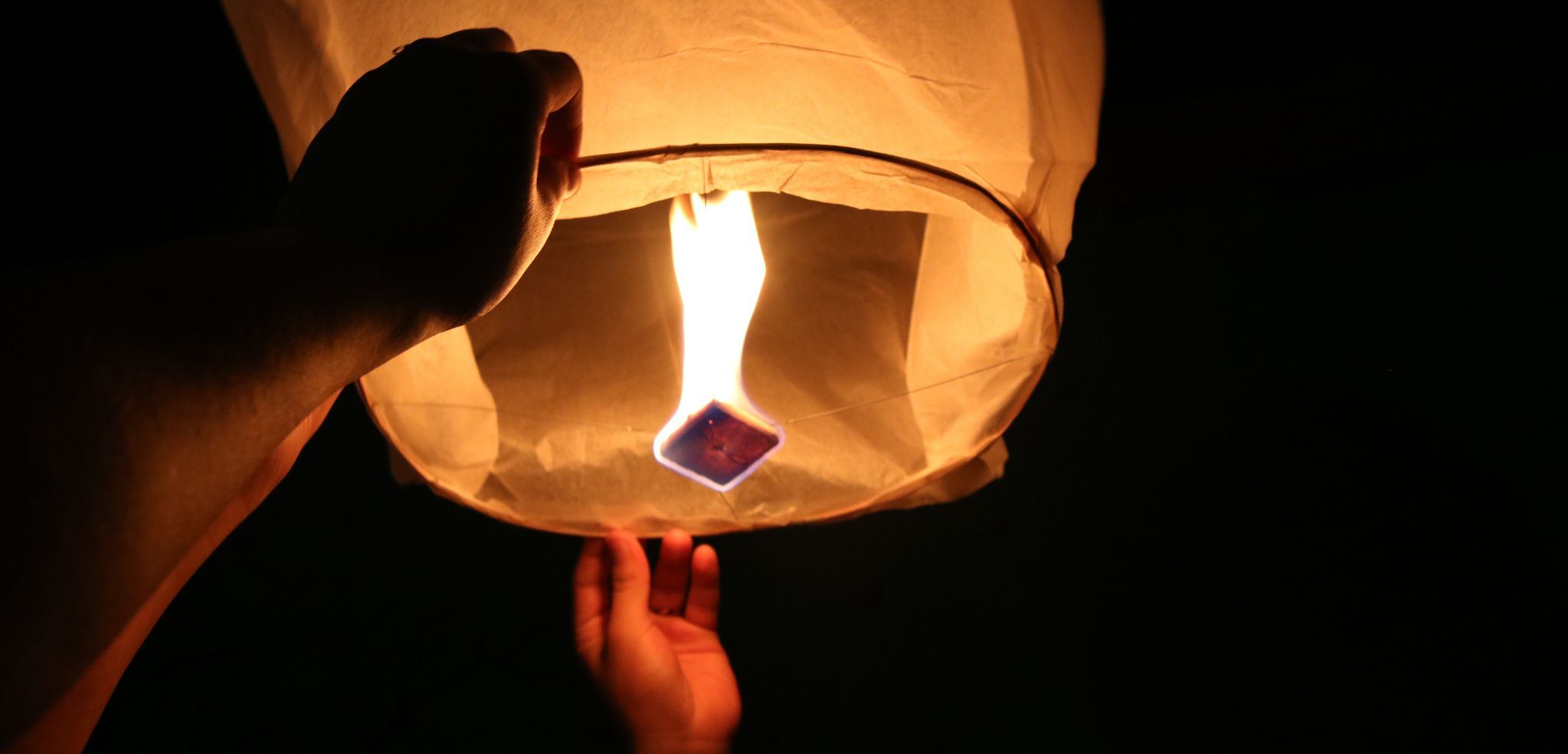

Your pain is the breaking of the shell that encloses your understanding.
—Kahlil Gibran
When Kahlil Gibran speaks about pain, he likens it to medicine and connects healing to understanding. The understanding is of the self and its relation to the larger order of things. When I think of his use of the word shell, two things come to mind: ignorance is bliss and ignorance is limiting. And when that shell cracks, it is both painful (no more bliss) and give rise to the possibility of increased understanding and healing through that openness.
When the pandemic struck in 2020, that shell cracked for many of us when our illusion of control shattered and the routines that held our days together dissolved. Our campuses shut down, and I wrote “Hope Matters” to metabolize my own fear, pain, and grief and to be useful. So many of us were experiencing fear like never before. We and our students were caught in a tide of uncertainty that was moving faster and more unpredictably than our nervous systems could process. In that piece, I offered strategies to keep students learning by focusing on and reminding them that they are part of community.
As the Covid emergency receded, I began to wonder whether those hope-centered teaching practices were merely crisis hacks or the beginnings of some kind of durable pedagogy. The surprising reach of that essay (and the hundreds of colleagues who have written since to say it resonated) has convinced me that the ideas that I wrote then were not only about a moment of crisis but also more broadly applicable: The ideas are a call, perhaps mostly to myself, to reorient education around connection, presence, and humanity.
The world did not become simpler after 2020; it became noisier, faster, and more demanding. We have experienced nearly six years of disruption. Political polarization and rapid technological change challenge our teaching beliefs and practices. The epidemic of loneliness plaguing young adults (and society in general) continues, not to mention the slow violence of climate crisis and growing inequality. The current, unprecedented attacks on higher education’s legitimacy have led to a vocal and public backlash against many of the ideals that higher education has valued most, causing moral injury and distress.
Sustainable teaching, not to mention meaningful learning, is difficult in times of disruption.
Emotions shape cognition. When our students feel safe, seen, and oriented, their attention stabilizes, their motivation rises, and their memories consolidate. By creating those conditions, we facilitate our students’ cognition because emotions and affect shape attention and motivation—and those capacities are prerequisites for learning. Cognitive load theory reminds us that clarity and predictability promote learning by reducing anxiety.
Hope as design choice
If pain is the process of breaking that allows understanding to emerge, perhaps hope is the architecture we build around that opening, a design that allows healing to take shape.
I’ve learned that hope, far from a sense of optimism, is a design choice, a term I take from civil engineering. The hope I mean is the kind that forms around pain. The pain of shattered assumptions, betrayal (personal or systemic), abandonment, violence, and injustice. Hope is not positivity or escapism but an audacious choice and commitment to the possibility of a better world, expressed through work, strategies, and the patient planting of seeds whose fruits we may not live to see. In “Hope Matters,” I offered purposeful decisions: Acknowledge the moment (bear witness), communicate with intentionality and care, narrate change, lower unnecessary stakes, scaffold community. Today, I would add to those: Model and invite meaning-making, offer meaningful options, and align assessments with what actually matters. The conditions that nurture hope are cognitive supports that lower extraneous load, allowing our students to spend their effort on germane load, the mental work that actually builds knowledge.
Hope, in practice, looks like rubrics that clarify purpose, deadlines that respect the realities of students’ lives, and feedback that invites revision and growth. It also looks like course policies that assume variability in students’ lives without lowering expectations. For example, our courses can have structured opportunities for do-overs that privilege opportunity for mastery over one-and-done performance.
And because design can become culture through repetition, these choices should appear in syllabi, in learning management system templates, and as department norms—not only in individual classrooms. Let me be clear. This kind of hope takes work, and it can serve as an infrastructure that helps us design learning experiences that allow our students to risk curiosity even in, or perhaps especially in, uncertainty.
I would argue that the need for hope endures. Here, I offer five working principles to help us continue to make hope operational in our classrooms and institutions:
- Care should govern challenge and pace. I love being challenged, and I want that for my students too. If I don’t challenge my students, I feel like I’m failing them. What the pandemic taught me is that challenge paired with care is far better for learning than challenge driven by velocity, where velocity is the pressure to move fast, cover more, and leave less room for processing.
- Our presence scales. Across my years in the academy, the steady presence of colleagues has carried me, whether through quick check-ins or the occasional hallway “you’re not alone.” That same presence translates for our students. One well-timed message can anchor an entire semester. Back in 2020, the advice to simply email students, to remind them they weren’t learning alone, felt modest. But modest actions can multiply dignity especially in a dignity-scarce moment. That hasn’t changed. Presence is not about constant availability; it’s about predictable touchpoints.
- Community is our curriculum. Allowing space for students to bring their full lives into learning was essential in 2020, and it remains so. Learning happens in networks of belonging, not in sterile bubbles. Knowledge is socially constructed. Often, our ideas sharpen in dialogue with others, student misconceptions surface in group assignments, and meaning grows when multiple perspectives test an explanation. Belonging cues are small but cumulative. These include correctly pronouncing names, making participation multimodal, and using brief, start-of-class check-ins that connect students and their prior knowledge to the day’s goals for learning.
- Mental health is academic. Connecting students to mental health resources is not an act of charity. I would argue that it is teaching. Nurturing mental health and well-being are part of the ecology of learning. Mental health is not extracurricular or nonacademic. Faculty are not therapists, but we are architects of conditions that support and facilitate students learning (see chapters 5 and 6 of How Learning Works).
- Naming reality reduces noise. Ignoring a crisis does not protect students. Teaching through a crisis gave students a place to process rather than drown in it. Above all, “How can I help?” is pedagogy. That question does three things: It acknowledges context, invites agency, and generates actionable information. Perhaps the most radical lesson I learned is that asking students what they need is not indulgence. Teaching and learning is a partnership. That question alone reopens possibility when students feel hopeless.
Hope for me is no longer the fantasy of a sweeping overhaul that erases the world’s every injustice. Hope lives in the subtle, maybe thankless, day to day work of making things a little more humane and more possible. These teaching approaches make hope real by turning our values into concrete, repeatable practices that colleagues can adopt, adapt, and share.
Hope as a practice needs models and needs memory.
A few years ago I sent my students an end-of-semester thank-you note and wrote that they each give me hope. I quoted Jane Goodall, who wrote about hope and whose voice has been a compass for me in these years. For Goodall, hope is moral courage, forged in the face of destruction, in the willingness to see wounds clearly and still act. Goodall reminds us that hope is active, not passive. It digs in, touches our pain, listens deeply, and insists that no act is too small. As she often said, “What you do makes a difference, and you have to decide what kind of difference you want to make.” She carried this conviction even while standing at the edge of environmental collapse.
Goodall’s hope is the kind of hope education requires: to model and impart to our students the courage to act responsibly in a fractured world. Hope, in her model, is inseparable from responsibility. It is a refusal to yield to despair and a refusal to give in to the convenience of forgetting. It says: We will not erase the wound, but neither will we let it paralyze us.
Sitting with our wounds
Over these past few years, I have come to understand hope as inseparable from memory. To hope authentically, we must resist forgetting. To sit with the wounds of the past and those of the present is to refuse to forget the harm we’ve undergone or perpetuated. But hope insists that even as we remember, we must also act. This seemingly contradictory action asks us to hold grief and possibility together. To plant seeds while still carrying the memory of what was lost. To let the wound instruct us but not define us. This is not an argument for dwelling in pain; it is an invitation to let pain refine our commitments to our students’ learning and growth.
Our elders and ancestors knew this well. Civil rights leaders, freedom fighters, teachers who risked comfort to confront injustice . . . many are gone now, but their lives remind us that wounds carried with integrity can be seeds of repair and source of collective responsibility. Their absence presses us to carry forward their unfinished work even when the path ahead is unclear, trusting that hope is a practice oriented toward action and shared possibility.
Hope as pedagogy
So much has shifted since 2020. We live now in the age of AI’s reshaping what counts as knowledge, in an era some call “post-truth,” in a world of relentless crisis. But amid the churn, the inextricable connection between hope and learning remains steady:
- Hope is relational. Learning is relational. To learn effectively and efficiently, students still need presence, connection, and care more than any new tool or platform. No technology compensates for a missing relationship; tools can amplify design, not replace genuine human attention.
- Hope is communal. No one learns alone. Belonging remains one of the most reliable predictor of persistence. Build belonging on purpose: shared norms, cocreated agreements, and public celebration of growth.
- Hope is structural. Learning still requires clear design, flexible paths, and feedback. When our structures are humane, our students use their energy for learning rather than decoding expectations.
- Hope is ethical. Beyond policy compliance, this is a virtues question. If we borrow from classical ethics, institutional choices should cultivate courage, justice, prudence, and temperance: courage to name and mend harm, justice in how we allocate time and opportunity, prudence in weighing tradeoffs, temperance in resisting speed for speed’s sake. Ethics shows up in what we assess, how we grade, and who bears the cost of our policies.
I reckon that sometimes hope feels obsolete. Perhaps in such moments, it is important to reimagine hope as fidelity to what we know is true, fidelity to memory, fidelity to the world we long for but cannot yet fully see.
The perdurability of hope
Why hope? Because you matter. We matter. Our work as educators matters, and so do our students and their futures. Hope still matters because it keeps us human. It steadies us when the future is so opaque. It makes room for grief without letting grief consume us. It carries memory without surrendering to amnesia. It teaches us courage, invites us to imagine otherwise, and helps us build learning sanctuaries where dignity is not the exception but the rule. And the alternative is thinly disguised cynicism. Our students can tell the difference.
Yes, the work of education is to transmit knowledge. But it can also be to cultivate the conditions for wisdom. That work is relational, brave, and beautiful. Hope matters because students do. Because wounds do. And because, even in this age of algorithms and uncertainty, we can still choose to act with integrity, and we can still build the world our hearts long for.
Mays Imad is an associate professor of physiology at Connecticut College. Previously, she taught for 14 years at Pima Community College, where she also founded the teaching and learning center. She is a Gardner Institute Fellow for Undergraduate Education, an Association of American Colleges & Universities Senior STEM Fellow, a Mind and Life Institute Fellow, a scholar-in-residence at Georgetown University’s Red House, and a research fellow with the Centre for the Study of the Afterlife of Violence and the Reparative Quest (AVReQ) at the University of Stellenbosch.
The post Why Hope Must Endure in Our Courses appeared first on The Teaching Professor.