

“I spent hours on the Gulliver’s Travels reading—yes, hours—and I still didn’t get through the Lilliput section!” my student, Sarah, bemoaned after class one morning. I asked her to walk me through her approach.
“First, I read Jonathan Swift’s biography really carefully,” she said. “Like, line by line. Then I worked slowly through the historical context headnotes. By the time I reached the novel itself, my brain had run out of juice!”
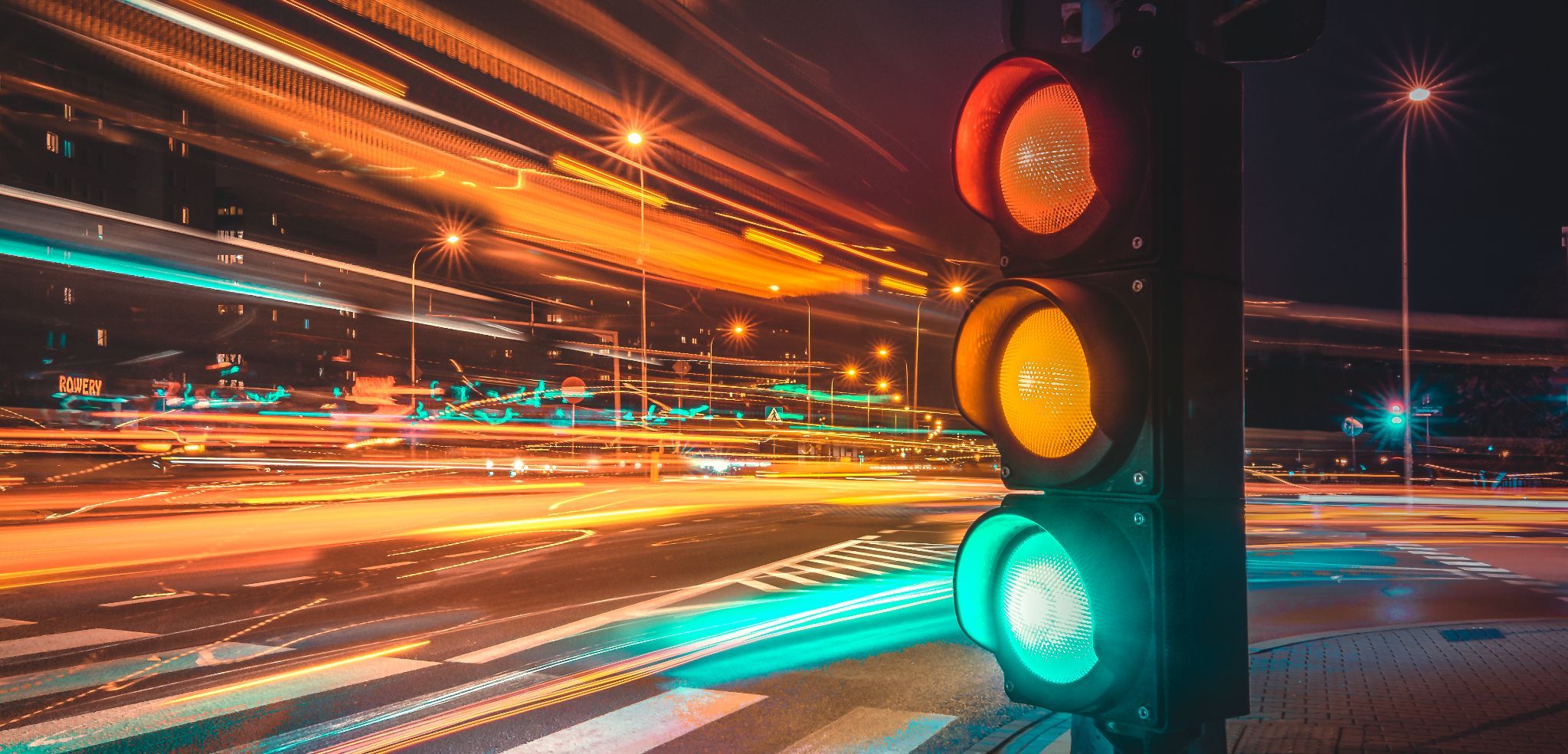
What concerned me was not Sarah’s effort, which was genuine, but the assumptions behind it: that every component of the assignment deserved the same intensity of attention and that good readers move at a uniform pace. That realization prompted me to introduce a shared classroom metaphor for reading speed, one borrowed from driver’s ed. We call it the stoplight strategy.
Adaptive reading
Decades of literacy research have shown that what distinguishes skilled readers from less experienced ones is not speed or stamina but adaptability. Experts adjust their pace in response to purpose, genre, and difficulty. They move through texts unevenly, pausing where meaning is dense and accelerating where it is not. Reading, for them, is less a steady march than a series of deliberate decisions.
I often share eye-tracking scholarship with my students to show how this flexibility operates in real time. (This 2021 interview with pioneer of eye-tracking research in reading Keith Rayner is useful here—especially 14:37–28:11.) These studies show that skilled reading unfolds as a sequence of rapid saccades—brief eye movements that reposition the gaze—interspersed with fixations, the moments when the brain processes visual information. Fixation durations lengthen when language becomes unfamiliar or cognitive load increases and shorten when the text is predictable. Readers also make regressions—right-to-left saccades back to earlier words or phrases—not as a sign of failure but as a deliberate move to support comprehension. Eye movements, in other words, register understanding as it unfolds, mapping readers’ moment-to-moment regulations of pace and attention.
Perhaps most importantly for those of us who assign challenging texts—like Layamon’s Brut, which I’m tackling with students right now—deep comprehension depends on pacing across multiple passes. Readers shouldn’t expect to extract meaning all at once but assemble it over time as they recalibrate their speed: moving briskly to establish orientation (often with aids like audiobooks), slowing when comprehension falters, and returning selectively to passages that demand closer attention.
A shared language
The stoplight strategy breaks reading into three modes, each tied to a different pace and purpose.
Green-light reading is fast and momentum driven. It’s appropriate for first passes, gauging narrative flow, familiar material, or skimming sections whose function matters more than their details. Readers move forward without stopping to resolve every question, trusting that not all uncertainty needs immediate attention. Green-light reading answers the question: What’s happening here, broadly speaking? It prioritizes orientation over precision and keeps readers from stalling before the text has had a chance to reveal its shape.
Yellow-light reading is where most reading happens. It is cautious, provisional, and purposeful—slower than skimming but not yet full-on close reading. Yellow-light reading involves brief pauses to paraphrase a sentence, flag a moment of uncertainty, or mark a passage for return. Rather than treating confusion as a problem to solve immediately, yellow-light readers use it as information, deciding in real time whether the text calls for patience, speed, or a stop. This mode helps readers regulate their pace without losing momentum.
Red-light reading is slow, deliberate, and recursive. This is close reading in its fullest sense, reserved for passages that do the conceptual, rhetorical, or emotional heavy lifting of a text. Here, readers linger over language, syntax, and structure, often rereading a passage from different angles. Red-light reading resists forward motion in favor of depth—and that resistance is precisely its value. When preparing a research essay, students use red-light reading to slow down long enough to interpret evidence rather than simply collect it.
What would Sarah’s reading session have looked like had she approached the assignment using the stoplight strategy? Swift’s biography likely called for a green light, skimming for orienting details rather than dwelling on every sentence, while the historical headnotes would have lived mostly in yellow, with brief pauses to paraphrase dense moments and flag questions for return. When she reached Gulliver’s Travels, Sarah could have begun with a green-light pass through the Lilliput section, using Swift’s own chapter summaries to trace the arc of the episode, and then spent most of her time in yellow, tracking the narrative and monitoring comprehension. She would have shifted to red only where the language or ideas demanded closer attention, particularly in passages she might later use as textual evidence in a research essay. Instead of exhausting herself early, she would have distributed her effort more intentionally, trusting that understanding could build across multiple encounters. Sarah’s issue was never effort; it was calibration.
In practice
Here are just a few ways that the stoplight strategy informs our classroom work.
Pre-reading method. Attention to pacing can ease anxiety even before students make a first pass through the text.
We often spend the last 10 minutes of a class session “stoplighting” the next reading together. Students scan the assignment in their course packs and predict the pacing each section is likely to require. As they compare judgments, they explain their reasoning by pointing to prose density, unfamiliar context, whether a passage summarizes or argues, and section length relative to function. Differences in expectations become openings for inquiry: Why does one student anticipate yellow where another predicts red? What cues in the text are they responding to?
While I generally resist being prescriptive about how students read, there are moments when I suggest which passages call for a green light and which deserve a red one. When we read Paradise Lost, for example, I make this distinction early on—especially when we reach Milton’s epic catalogue, the long roll call of fallen angels. In my experience, students often get bogged down here, stopping to look up every demon as if each name merits red-light attention, and the passage can easily gobble up an entire evening. The work here isn’t to linger over every name but to register scale, accumulation, and effect—how the catalogue overwhelms, signals Milton’s ambition, and situates Satan within a vast infernal hierarchy. I encourage students to treat the catalogue as green-light reading.
I make a similar move with the Porter scene in Macbeth. Students are often tempted to camp out there—drawn in by the bawdy humor and strangeness of the prose—and many assume it deserves extended red-light attention. I caution them against that impulse, at least on a first pass, and frame much of the scene instead as green-light reading. Students don’t need to parse every joke to grasp the scene’s primary function: delaying the revelation of King Duncan’s murder.
Discussion starter. I also ask students to come to class having identified one red-light passage they’d like us to sit with together. I frame it as an invitation rather than a test: Which moment caught you? Where did you want to slow down?
Sometimes, one student’s red light is another’s green—and those differences often spark the richest conversations. When we read Sir Gawain and the Green Knight last semester, one student flagged the deer-cleaning scene as a red light. He slowed down over the careful sequence of actions: the animal strung up, the hide slit and peeled away, the organs removed in a precise order, each cut purposeful rather than gratuitous. “I’m a hunter,” he revealed, “And this is exactly how it’s done. It felt familiar.”
Another student jumped in, laughing: “I green-lit straight through that passage,” she said. “If I’d lingered, I was going to be sick!”
Instead of debating whether the scene was excessive, the stoplight strategy asked a better question: Why does the same passage pull readers at such different speeds?
Trust builder. Talking explicitly about reading speed and effort also changes what students are willing to say out loud. When reading is framed as a matter of pacing rather than willpower, students speak more openly about the limits they’re navigating—jobs, caregiving responsibilities, exhaustion, anxiety. The stoplight strategy brings those constraints into view without putting students on the defensive.
Just as importantly, these conversations correct a quiet assumption many students carry—that faculty design assignments for imaginary students with infinite time and attention, not for the real people sitting in the room. When we talk openly about regulating effort, students hear something else as well: that I am teaching them, not an idealized reader, and that managing energy is part of the work of reading well.
Nichole DeWall is a professor of English at McKendree University in Lebanon, Illinois, where she teaches Shakespeare, medieval and early modern literature, drama, and composition courses.
The post Stop, Slow Down, Go: Challenging the Myth of the Single-Speed Reader appeared first on The Teaching Professor.