Preconference Workshops
The Teaching Professor Conference offers a selection of 2.5 hour preconference workshops to further enrich your conference experience. The cost is $319 for each preconference workshop. The workshops are held Friday, June 5 in the morning and afternoon before the conference begins.
Enrollment is offered during conference registration.
If you have already registered for the conference and would like to add a workshop to your registration, call 608-246-3590 to enroll.
Check back soon to see who will be taking the stage!
Students Have AI—Now What? Designing for How Learning Actually Works
Friday, June 5 | 9:00 - 11:30 am
The rise of AI tools has amplified a longstanding challenge: students often rely on strategies that feel productive but don’t actually promote lasting learning. This workshop reframes the conversation around what we know works from learning science—approaches that make content stick while reducing busywork for you and your students.
When courses are designed around evidence-based learning principles, students develop cognitive skills that AI cannot replicate: deep understanding, critical thinking, and knowledge transfer. These same principles create more efficient teaching by focusing student effort where it matters most…on learning! In this workshop, we’ll explore research-backed strategies that help students move from surface-level engagement to deeper learning. We’ll model these approaches so you experience them as a learner before implementing them as an instructor. Attendees will leave with practical, adaptable course design elements requiring no full overhaul—just concrete activities, scaffolded assignments, and transparency tools. The result: Students who learn more deeply, retain content longer, and develop metacognitive skills to become expert learners in your field and beyond.

Michelle Blank
Michelle Blank
Dr. Michelle Blank Rentz loves being a bridge-builder between research and practice. As Senior Director of Academic Success at Goshen College, she gets to work both sides of learning by helping faculty reimagine their course design and develop as professionals while also coaching students on how to actually learn effectively. A lifelong learner herself, Michelle holds master’s degrees in Librarianship and Research, and Education, as well as a PhD in Curriculum, Instruction, and the Science of Learning. Her work focuses on faculty development, disciplinary literacy, equity pedagogy, and exploring how AI can serve as a genuine learning partner rather than a shortcut.

Jeremy Rentz
Jeremy Rentz
Jeremy Rentz is the Schantz Distinguished Professor of Environmental Engineering at Trine University. In this role he supports student learning by using exceptional slides, building connections with students, and getting out of the way so students can do some of the work in the classroom. In the professional development arena, Jeremy champions these teaching tools and other practical strategies by facilitating faculty discussions and workshops wherever teachers are striving to improve student learning.
AI Didn't Just Change Student Work; It Changed Ours, Too: What Faculty Can Do Next
Friday, June 5 | 9:00 - 11:30 am
Generative AI has made it possible for students to produce fluent, polished work with minimal apparent effort. In response, instructors are asking how to stop AI use or, alternatively, how to integrate it responsibly. This workshop argues that both approaches miss a central problem: What the existence of AI is doing to faculty work itself.
Teaching feels harder, more uncertain, and more exhausting than it did just a few years ago. We now find ourselves continually redesigning courses to try to grab students by their brains, constantly rebuilding assignments and assessments that no longer work, and monitoring authorship to determine whether what we receive is human work or a machine artifact. We often must do this without clear guidance or institutional support. The result is not just confusion but instead sustained fatigue. This workshop reframes AI as not a student problem but instead as a work redesign problem. Attendees will identify the specific ways that AI is reshaping our instructional labor, why common responses to AI increase workload, and which practical strategies we might use to reclaim teaching. To accomplish these goals, we will workshop a framework for analyzing the primary new challenges we face in our work and determining strategies for addressing them, with or without incorporating AI into our classes. The focus of the workshop is on making strategic decisions that will protect the core of our instructional work, without creating an unsustainable workload.
Claire Major
Claire Major
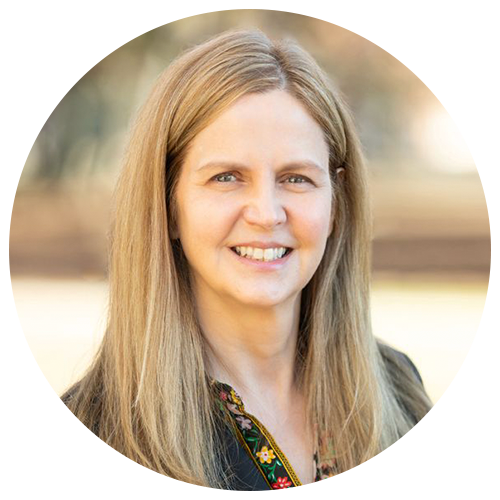
Claire Major is a Distinguished Teaching Professor of Higher Education at The University of Alabama and Faculty Director of the University of Alabama Teaching Academy. Her teaching and research interests center on instructional approaches and instructional technology. Major has authored and co-authored 11 books and published more than 40 articles in top-tier journals. She has presented her research at national and international conferences and has delivered public lectures and conducted workshops, both in person and online, for dozens of colleges and universities across the United States and internationally. She is also the co-founder of the Cross Academy.
Scaling Up with Universal Design for Learning…and How to Get Colleagues to Join You
Friday, June 5 | 1:00 - 3:30 pm
To help make educational materials and practices inclusive and useful for all learners, this interactive workshop radically reflects on how instructors and designers can adopt Universal Design for Learning (UDL) in order to create learning interactions that provide students with more time for study and practice in their busy days: broaden our focus beyond learners with disabilities and toward a larger ease-of-use/general-inclusion framework.
Our workshop will contain three scaffolded elements: an overview of UDL, how to scale up UDL efforts beyond individual actions, and how to talk with colleagues in order to establish UDL communities of practice. Together, we’ll work through beginner, practitioner, and advanced-level UDL applications.

Thomas J. Tobin
Thomas J. Tobin
Thomas J. Tobin is an internationally recognized scholar, author, and speaker on technology-mediated education—especially copyright, evaluation of teaching practices, academic integrity, accessibility, and universal design for learning. Tobin helped found the University of Wisconsin-Madison Center for Teaching, Learning, and Mentoring. On Ed Tech Magazine’s Influencers “Dean’s List,” honored with the Wagner Leadership Award in Distance Learning Administration, and one of Eduflow’s global Top 100 Learning Influencers, Tobin serves on the boards of Advances in Online Education, InSight: A Journal of Scholarly Teaching, the Online Journal of Distance Learning Administration, and the Oklahoma University Press Teaching, Engaging, and Thriving in Higher Ed series. His books include: Evaluating Online Teaching (2015), The Copyright Ninja (2017), Reach Everyone, Teach Everyone: Universal Design for Learning (UDL) in Higher Education (2018), Going Alt-Ac: A Guide to Alternative Academic Careers (2020), Implementing UDL in Irish Further Education and Training (2021), and UDL at Scale (2026).
Between Harm Reduction and Hope: Analog Inspiration and Human-Centered AI
Friday, June 5 | 1:00 - 3:30 pm
This interactive workshop reframes generative AI’s impact on education around the human values, skills, and concerns that matter most to us as educators.
Guided by Analog Inspiration—a card deck featuring 47 concepts ranging from Accessibility to Wonder—we’ll engage in both analog play and digital experimentation to meet this morally- and logistically-complicated moment. After introducing a framework for human-centered AI pedagogy, we’ll use the cards to reflect on our own values, discuss AI’s ethical implications, approach difficult AI-related teaching scenarios, and develop assessment strategies to proactively disincentivize “cheating”—we’ll also interrogate what we mean by that term. We’ll then move into guided individual AI experimentation, where you will have a chance to apply card concepts to your own specific educational contexts. Together, we’ll break and remake our assignments, audit our educational materials to add more care and build intrinsic motivation, and develop practical strategies that we can take with us after the conference.

Carter Moulton
Carter Moulton
Carter Moulton is an educational developer, facilitator, and media researcher. As a Faculty Developer at Colorado School of Mines, he leads initiatives around generative AI, teaching, and learning. He created Analog Inspiration, an educational card deck helping faculty explore how critical human values and skills are impacted by generative AI. Since launching in June 2025, it has been adopted at hundreds of universities worldwide and featured in places like Teaching in Higher Ed, AI4K12, Inside Higher Ed, and the Association of College and University Educators. Carter holds a PhD from Northwestern University. His pedagogical work includes co-developing teacher training programs in Thailand as a Peace Corps Volunteer, creating a peer observation program for graduate students at Northwestern, and designing faculty training in Gujarat, India. His publications on teaching and learning have appeared in Teaching and Learning Inquiry, the American Society of Engineering Education, and the Journal of Cinema and Media Studies Teaching Dossier. His media research on digital culture has been published in the International Journal of Cultural Studies, Popular Communication, and Communication, Culture and Critique.
The Science of Learning and the Humanity of Teaching
Friday, June 5 | 1:00 - 3:30 pm
In the last couple of decades, faculty have been invited and sometimes urged to “follow the science” of learning. But what does it actually mean to turn to science in the work of teaching? What can the neurobiology and cognitive science of learning help us see more clearly, and what can they never fully capture?
In this pre-conference workshop, we will explore the productive tension between two truths: learning science offers powerful, practical insights, and yet every scientific claim is situated—bounded by time, methods, models, and the particular participants a study did (and did not) include. Our classrooms are not laboratories; they are lived environments shaped by relationships, identity, attention, emotion, culture, and the unpredictable texture of human experience.
If we treat research findings as prescriptions, we risk teaching to an “average” learner who may not exist, or we may miss how neurodivergence and context reshape what is possible in the moment. We will examine a small set of core learning principles that have shown durability across decades of research while also interrogating what we still don’t know, what remains contested, and where our own teaching experiences serve as essential data.

Mays Imad, PhD
Mays Imad, PhD
Mays Imad, PhD, is an Assistant Professor of Physiology and Equity Pedagogy at Connecticut College. Prior to that, she taught in the Department of Life and Physical Science at Pima Community College where she also founded the teaching and learning center. A Gardner Institute fellow, an AAC&U senior fellow, and a Mind & Life Institute fellow, Imad’s research focuses on biofeedback, stress, self-regulation, advocacy, and classroom community, and how these impact student learning and success. A nationally recognized expert on trauma-informed teaching and learning, Imad is interested in understanding the social determinants of wellbeing and their effects on students’ ability to learn and thrive. She works with faculty across disciplines and institutions to promote inclusive, equitable, and contextual education–all rooted in the latest research on the neurobiology of learning.
WordPress database error: [Unknown column 'wp_posts.post_type' in 'where clause']SELECT SQL_CALC_FOUND_ROWS wp_comments.comment_ID
FROM wp_comments LEFT JOIN wp_posts AS wp_posts_to_exclude_reviews ON comment_post_ID = wp_posts_to_exclude_reviews.ID
WHERE ( comment_approved = '1' ) AND comment_post_ID = 678775 AND comment_parent = 0 AND comment_type != 'order_note' AND comment_type != 'webhook_delivery' AND comment_type != 'action_log' AND wp_posts_to_exclude_reviews.post_type NOT IN ('product', 'wc_user_membership') AND wp_posts.post_type != 'espresso_attendees'
ORDER BY wp_comments.comment_date_gmt ASC, wp_comments.comment_ID ASC